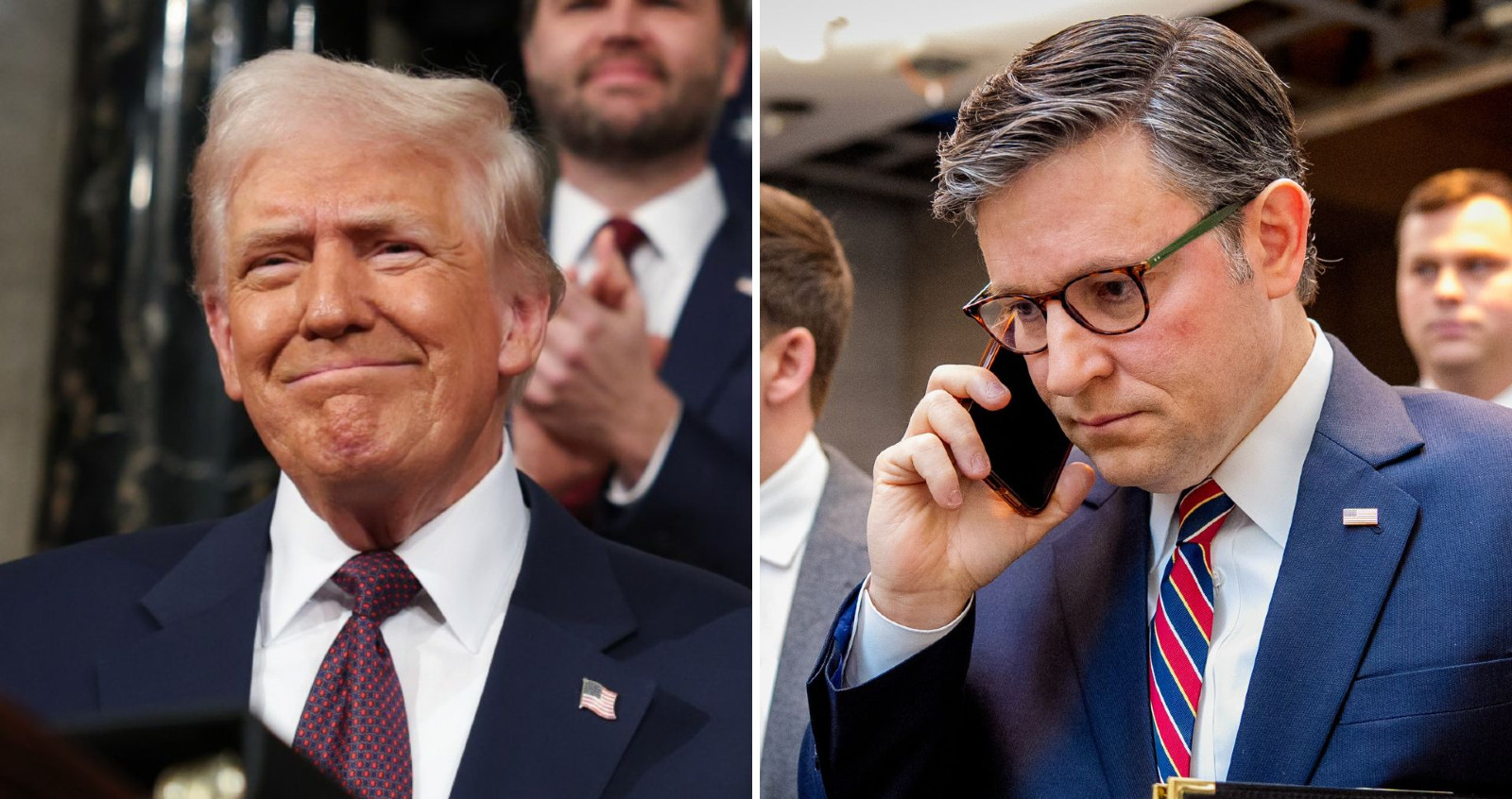
House Speaker Mike Johnson said he is “praying for a resolution” to the escalating conflict involving Iran.
Johnson also emphasized that President Donald Trump remains firmly committed to preventing Tehran from obtaining a nuclear weapon.
Johnson made the remarks Monday during an interview with Todd Starnes on The Todd Starnes Show, which is scheduled to air Tuesday.
The comments come as concerns continue mounting over instability across the Middle East, including fears that a prolonged regional conflict could trigger major economic consequences tied to energy markets, shipping routes, and global security.
“I talk with the president about it almost every day,” Johnson said.
“He certainly understands that he wants it to be resolved quickly, but it must be done in the right way,” the Louisiana Republican added.
Johnson stated that Trump’s stance has remained consistent during negotiations and military tensions in the region.
“We have to finish the job, so to speak,” Johnson said.
“That means we’ve got to ensure, of course, his number one condition is that Iran can never have a nuclear weapon,” he told Starnes.
Trump administration officials have repeatedly warned that Iran’s nuclear ambitions pose a serious threat not only to the United States, but also to American allies across the Middle East and Europe.
Trump administration officials and allied governments have consistently argued that a nuclear-armed Iran would dramatically destabilize the region and embolden Tehran’s military and proxy operations.
Iran has long denied seeking to build a nuclear weapon, insisting its nuclear program is intended for civilian energy and research purposes.
However, Tehran has continued uranium enrichment activities that Western governments and international observers say go far beyond what is necessary for peaceful civilian use, Newsmax reports.
“You can’t have the largest sponsor of terrorist organizations with a nuclear weapon,” Johnson said. “It would be a disaster for the whole world.”
Johnson said negotiations are also focused on securing and disposing of “the remnants of their enriched uranium and other things that may still be in the country.”
“I think those are going to be all part of the negotiation that continues over 60 days,” he said.
The speaker emphasized the need to reopen the Strait of Hormuz, which is a vital global shipping lane for oil and trade.
Disruptions in this region have led to increases in energy prices worldwide.
“In the meanwhile, we can get the Strait of Hormuz reopened for commerce, because that’s important for everybody around the world,” Johnson said.
He also said that NATO countries, allies in the Mideast, and other nations like Pakistan are invovlved in peace negotiations.
“Our fingers crossed, we’re praying for a resolution there, and one that ensures the safety and the prosperity of Americans and everybody else for that matter,” Johnson told the host.
Meanwhile, Trump, Vice President JD Vance, and several other members of the administration were at the White House over the holiday weekend, hammering out the final details on a possible deal to end the war in Iran.
Tehran said Monday that its leaders and the U.S. have reached understandings on many issues in negotiations over a deal to end the conflict, but warned that an accord is not imminent.
“It is correct to say that we have reached a conclusion on a large portion of the issues under discussion,” foreign ministry spokesman Esmaeil Baqaei said during a weekly news briefing.
“But to say that this means the signing of an agreement is imminent—no one can make such a claim,” he added, accusing Washington of shifting its positions.
Secretary of State Marco Rubio said Monday that a deal to end the war with Iran could materialize “today,” adding that Israel had the right to defend itself against attack.
“We thought we might have some news last night, maybe today; I wouldn’t read too much into it,” Rubio said in New Delhi, referring to the potential agreement.