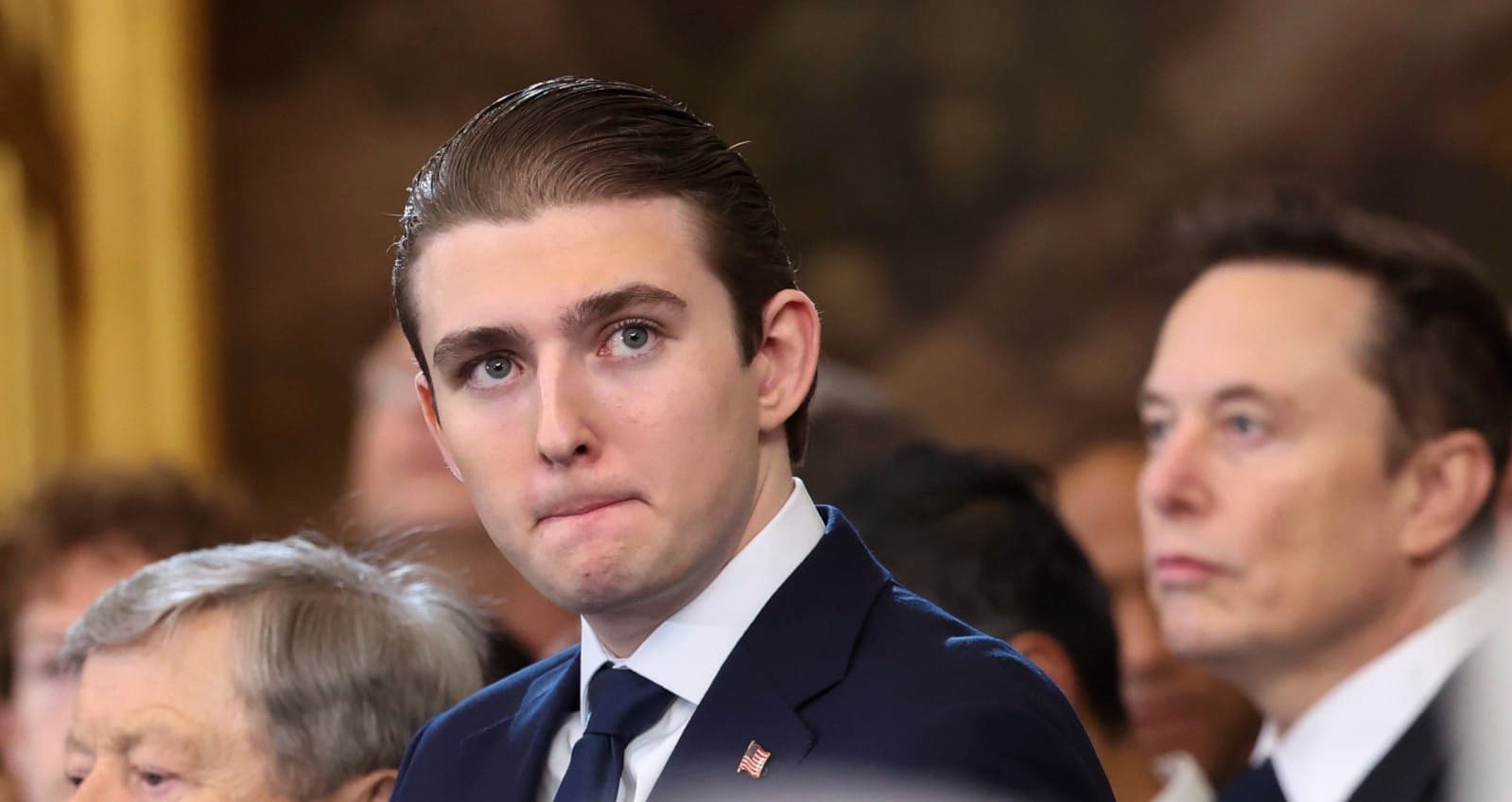
A House Democrat is attempting to drag President Donald Trump’s youngest son, Barron Trump, into a congressional investigation over the legal troubles of social media influencers Andrew and Tristan Tate.
There is no public evidence that Barron Trump had any involvement in the brothers’ cases or committed any wrongdoing—but this is what Democrats are focused on.
Rep. Yassamin Ansari, D-Ariz., sent a letter last week to House Oversight Committee Chairman James Comer, R-Ky., urging him to “swiftly open an investigation into the Tate brothers’ coordination and extensive relationships with members of the president’s orbit, including his son, Barron Trump.”
Ansari claimed the probe should examine “potential political interference and improper conduct by the federal government” related to the Tate brothers’ arrest, extradition issues, and return to the United States.
She specifically demanded that the committee “must learn from Barron Trump about his knowledge of the Tate brothers’ crimes, if he had any involvement whatsoever, and if he communicated with members of his father’s administration or the president himself regarding their legal proceedings.”
The Arizona Democrat also requested subpoenas for records from the Department of Justice, State Department, and White House concerning any communications about the Tates, including alleged “political or legal favors” such as “slow-walking criminal investigations.”
Yet multiple reports confirm there is no public evidence linking Barron Trump to any decisions about the brothers’ legal fate.
Sources note Barron has not been accused of wrongdoing and played no demonstrated role in government actions involving the Tates.
U.S. Marshals arrested Andrew and Tristan Tate, dual U.S.-British citizens known for their provocative “manosphere” content, in Miami on July 18 at the request of British authorities seeking their extradition.
They face dozens of charges in the U.K., including r*pe, human trafficking, and related offenses stemming from alleged activities between 2010 and 2017.
The brothers deny all allegations and are being held without bond while fighting extradition.
The Tates previously faced separate human trafficking charges in Romania dating to 2022. Romanian authorities lifted travel restrictions in February 2025, allowing the brothers to travel to Florida.
The White House has made clear it will not intervene in the current extradition process.
Press Secretary Karoline Leavitt stated the administration would not block the proceedings.
Ansari’s letter cites “investigative reports” of “direct, extensive communications” between Andrew Tate and Barron Trump.
The New York Times previously reported that Barron was a “fan” of Tate and spoke with him over Zoom in 2024, discussing their shared view that the Romanian case was an effort to silence the brothers.
Tate has publicly claimed closeness to the Trump family.
The Tates’ attorney has dismissed such reporting as “fake news.”
No evidence has emerged that these contacts involved any discussion of interfering with investigations, prosecutions, or extradition.
Donald Trump Jr. has also been linked to past interactions with Tate, but again without any proven influence over official matters.
In a subsequent interview, Ansari doubled down, calling Barron a “full-blown adult” who is “very influential in the Trump White House orbit” and claiming he “played a key role in facilitating” campaign relationships during 2024.
“There have long been ties between the Tates and the Trump family,” she said.
Critics see Ansari’s demand as pure political theater.
Comer, whose committee has focused on Biden-era scandals and government waste, has not indicated he will pursue the request.
Targeting a president’s adult son based solely on reported personal interest in online personalities — without any proof of misconduct — fits a familiar pattern of Democrats attempting to smear the Trump family when they lack substance against the president himself.
Dragging Barron Trump, who has largely stayed out of the political spotlight, into this fray based on unproven claims of “interference” represents a low point in congressional overreach.