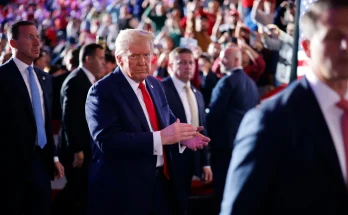
The stillness in Washington, D.C. that morning was striking not because it was dramatic, but because it was unfamiliar. The capital is accustomed to movement—motorcades, press briefings, shouted questions, the constant choreography of power on display. Yet in that brief window of time, the city seemed to pause. And within that pause stood Donald Trump, confronting a moment that observers would later describe as quietly consequential .
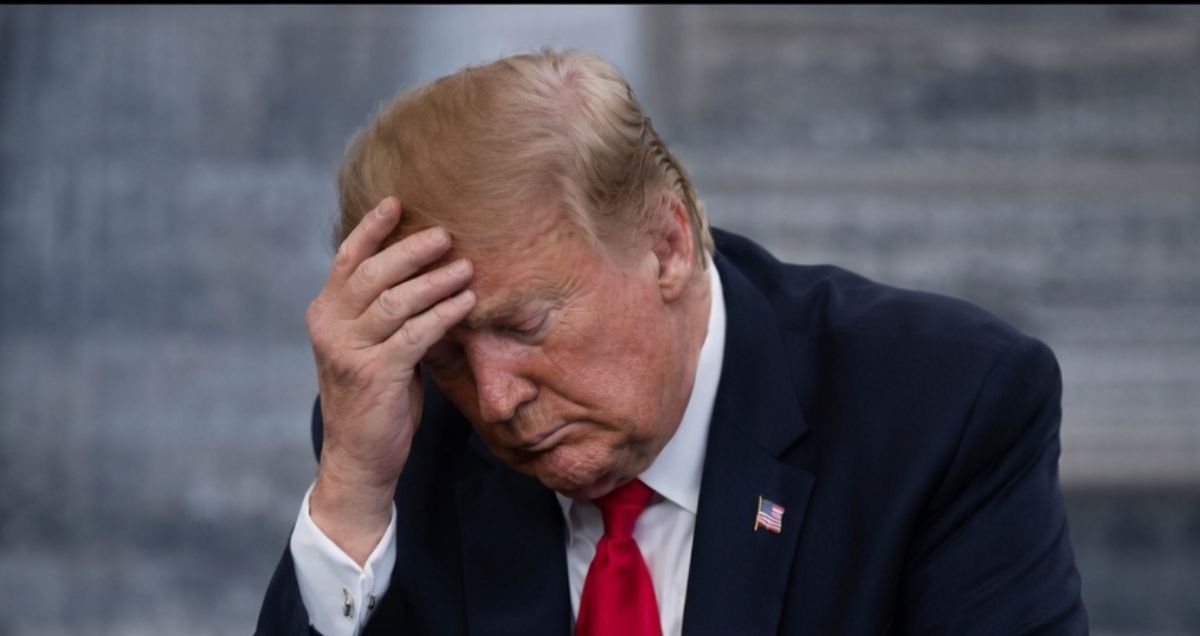
There were no rallies, no amplified applause, no defiant speeches delivered to a waiting crowd. Instead, there was restraint. Those watching closely noted something different in his presence—not collapse, not surrender, but a visible weight. The familiar posture of absolute certainty appeared softened, replaced by a more measured stillness. It was not an admission, nor was it theatrical. It was the kind of moment that does not announce itself loudly, yet lingers precisely because of what it withholds.
For years, Trump’s public image has been built on momentum: confidence projected outward, authority reinforced through repetition, and a refusal to slow down. That image has survived controversy, legal pressure, electoral defeat, and relentless public scrutiny. Yet here, removed from the noise that usually surrounds him, the contrast was impossible to ignore. This was not the Trump of campaign stages or executive announcements. This was a former president standing in the aftermath of power, aware that history had shifted from anticipation to evaluation.
Observers were careful not to overstate what they saw. This was not a moment of visible weakness. It was something more subtle and arguably more revealing: acknowledgment of consequence. Decisions once framed as bold or disruptive had moved fully into the record, no longer abstract or deferred. The future, which once served as a shield, had narrowed into the present. Accountability—legal, political, and historical—was no longer theoretical.
Such moments are rarely captured in headlines because they lack spectacle. Yet they matter deeply. History is not shaped solely by speeches or elections, but by these quieter inflection points where power recedes and interpretation begins. Expressions, pauses, and deviations from routine become fragments that later historians examine for meaning. Silence, in this context, speaks as clearly as rhetoric.
For Trump, this defining period may ultimately be remembered less for any single legal outcome or political maneuver than for the prolonged reckoning that follows power. The most consequential chapters of leadership often unfold after applause fades, when public figures are no longer shaping events but responding to how those events are judged. In that sense, the quiet was not empty. It was transitional.
The stillness also served as a reminder of how leadership is ultimately measured. Not by volume or dominance, but by endurance—what remains after the immediate effects fade. Laws, precedents, institutional trust, and civic norms all carry the imprint of those who once held authority. Trump’s presidency reshaped American political discourse in ways that will be studied for decades. That reality cannot be undone by defiance or dismissal.
This is how history often works—not through climactic finales, but through gradual recognition. The most defining moments are sometimes the quietest, occurring when spectacle gives way to consequence. For Trump, as for all leaders, the true measure of his time in power will emerge not from his own declarations, but from how institutions, citizens, and future generations interpret what endures.
In that light, those thirty minutes in Washington were not insignificant. They were not empty. They were the sound of history slowing just enough to take note.