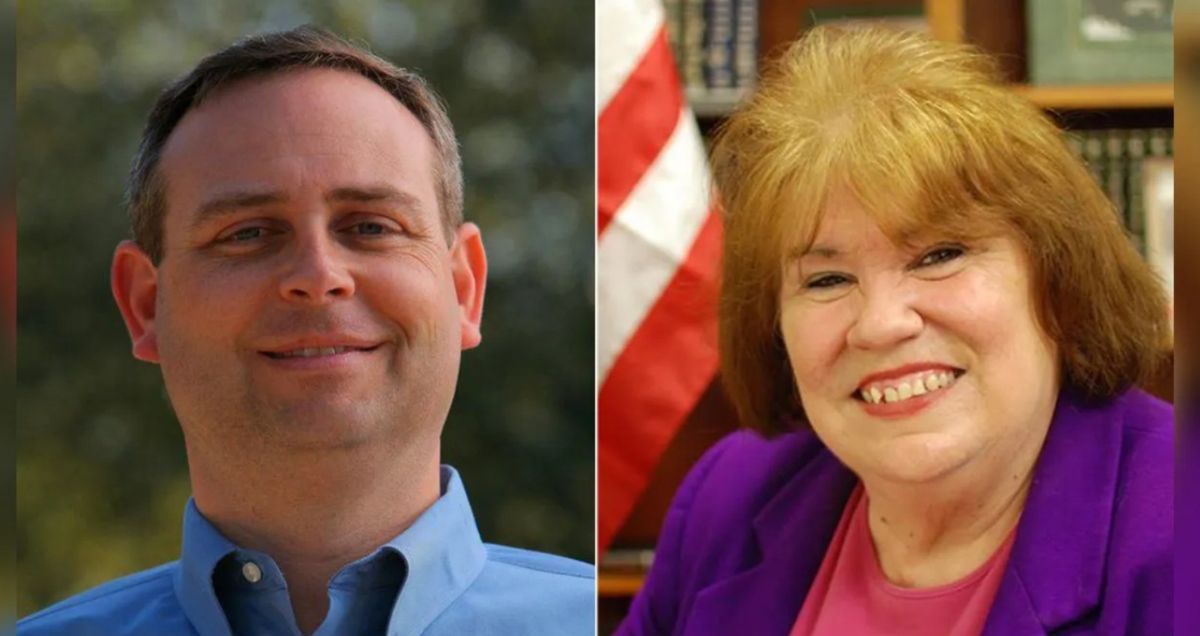
Republicans scored a notable local victory in North Texas after flipping Grand Prairie’s City Council Place 8 at-large seat in a razor-thin runoff — in a city that voted heavily Democratic in the 2024 presidential race.
According to early/mail and Election Day totals, Republican Rodney Anderson defeated Democrat Ana Coca 1,830 votes (50.7%) to 1,781 votes (49.3%), a margin of just 49 votes.
The result represents a striking overperformance compared to the city’s recent presidential voting pattern.
Grand Prairie spans multiple counties — primarily Dallas County, with smaller portions in Tarrant and Ellis counties. Roughly 80–85% of the city’s residents live in Dallas County, the most Democratic-leaning portion of the metroplex. In 2024, Dallas County gave Kamala Harris approximately 59–60% of the vote, while Donald Trump received just under 38% countywide.
Tarrant County — which includes a northern slice of Grand Prairie — leaned Republican in 2024, with Trump earning roughly 52% there. Ellis County, which contains only a small portion of the city, also leaned Republican.
Because the overwhelming majority of Grand Prairie residents reside in Dallas County, the city overall leans significantly Democratic in federal races. By available county-level data and precinct estimates, Harris carried Grand Prairie by roughly 20–21 points in 2024.
Against that backdrop, Anderson’s 51–49% victory amounts to an estimated 22–23-point overperformance relative to the city’s presidential margin just two years earlier.
The runoff followed a turbulent political stretch in Grand Prairie and the surrounding areas.
Grand Prairie, TX City Council Place 8 At-Large Runoff (Harris +21)
Final election night report:
🔴 Rodney Anderson ✅ – 2,009 (51.1%)
🔵 Ana Coca – 1,925 (48.9%)This is a 23.2 point overperformance for Republicans vs. 2024.
— VoteHub (@VoteHub) March 15, 2026
The Place 8 seat became open after Mayor Pro Tem Junior Ezeonu defeated longtime Democratic state Rep. Chris Turner in the Democratic primary for Texas House District 101.
That upset signaled volatility within local Democratic politics even before the city council race reached its climax.
Anderson, a former Texas state representative who previously represented House Districts 105 and 106 during the 2010s, emphasized his roots in Grand Prairie and his experience in both public service and the private sector.
He also formerly chaired the Dallas County Republican Party but told local outlet KERA that he had largely stepped back from active politics over the last five or six years.
Coca, meanwhile, campaigned on community engagement and continuity in a city that has steadily trended Democratic in national elections.
The race remained tight throughout the runoff period, reflecting both the city’s underlying partisan lean and the lower turnout typical of municipal elections.
While municipal races are officially nonpartisan, party affiliation remains highly relevant in large suburban cities like Grand Prairie, particularly in the Dallas-Fort Worth metroplex, where demographic shifts have reshaped political dynamics over the last decade.
Grand Prairie’s population has grown to more than 200,000 residents, making it one of the larger suburbs in the region.
Its geographic split between Dallas and Tarrant counties creates distinct political pockets — more Democratic-leaning precincts in the Dallas County section and more Republican-leaning precincts toward the Tarrant County side.
Still, because Dallas County accounts for the vast majority of residents, a Republican win citywide stands out.
The outcome suggests that local candidate quality, turnout composition, and issue framing can significantly diverge from national voting patterns. Municipal elections often hinge on public safety, property taxes, development, and infrastructure rather than federal-level partisan messaging.
For Republicans, the win provides evidence that suburban battlegrounds in North Texas remain competitive at the local level, even in areas that vote solidly Democratic in presidential cycles.
For Democrats, the result underscores the risk of complacency in lower-turnout municipal contests, particularly in fast-growing suburban communities where margins can narrow quickly outside of high-profile federal races.
Ultimately, the Grand Prairie Place 8 runoff demonstrates how local political environments can produce dramatically different results from statewide or national trends — and how even in a city that backed Harris by more than 20 points, a disciplined Republican campaign was able to flip a council seat by the slimmest of margins.