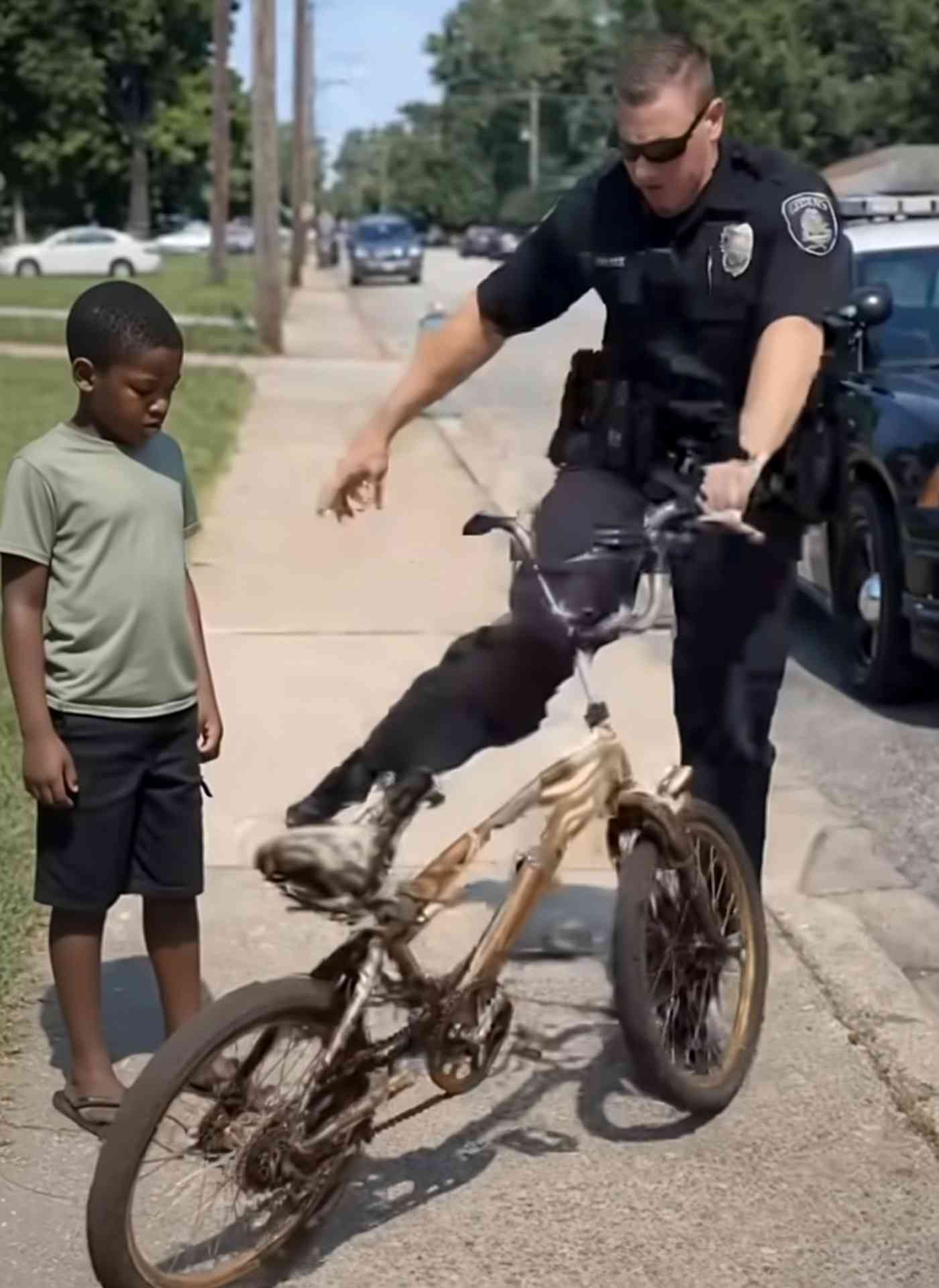
A young boy rode his bicycle along a calm residential street, enjoying a peaceful afternoon that felt simple and familiar. The neighborhood was quiet, with soft sunlight and minimal traffic passing through.
His small journey carried a sense of independence and joy. The bicycle he rode was not new or polished, but it held deep sentimental value because it had been passed down from his father.
For the boy, it represented both memory and personal connection. Despite its worn appearance, he treated it with pride and affection.
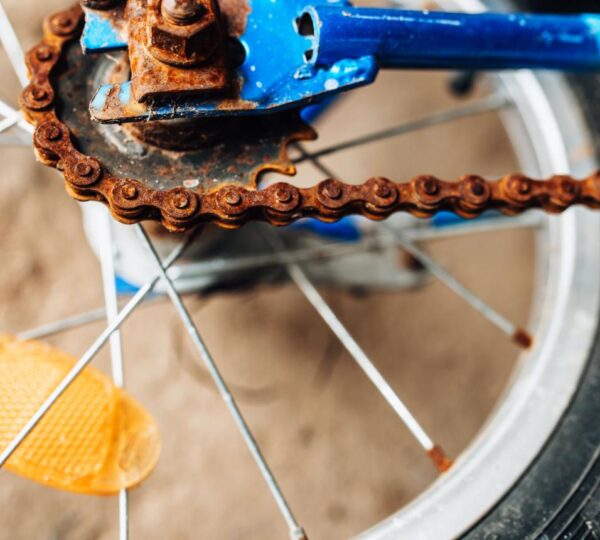
The bike showed visible signs of long-term use, including faded paint, minor rust on metal parts, and a chain that made noticeable sounds with each rotation.
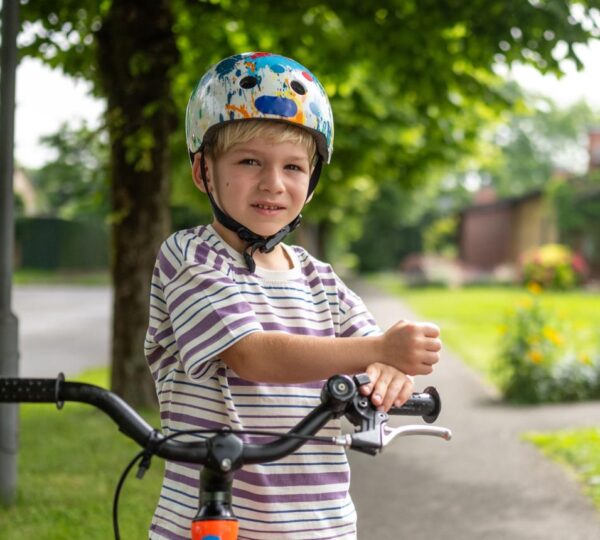
While it functioned, it clearly lacked modern safety standards and maintenance. As he continued riding, a few neighbors glanced toward him, noticing the noisy chain and uneven movement of the bicycle.
Some observed with mild concern, while others simply continued with their day, assuming it was a harmless situation.
The boy, however, remained fully focused on the experience of riding. He was unaware of any potential mechanical issues and instead enjoyed the freedom and comfort he associated with the bicycle.
His attention stayed on the road ahead, and he continued pedaling with enthusiasm. The ride symbolized more than transportation; it reflected childhood joy, emotional attachment, and a sense of personal independence.
An Unexpected Intervention
A uniformed police officer patrolling the area noticed the boy while observing general neighborhood activity. The officer’s attention was drawn specifically to the condition of the bicycle and the unusual noise it produced.
After briefly observing from a distance, the officer decided to approach the situation to ensure that the bicycle was safe for use. The decision was based on routine safety awareness rather than suspicion or wrongdoing.
The officer signaled for the boy to stop in a calm and controlled manner, ensuring that the interaction remained non-threatening and appropriate for a child in a public space.
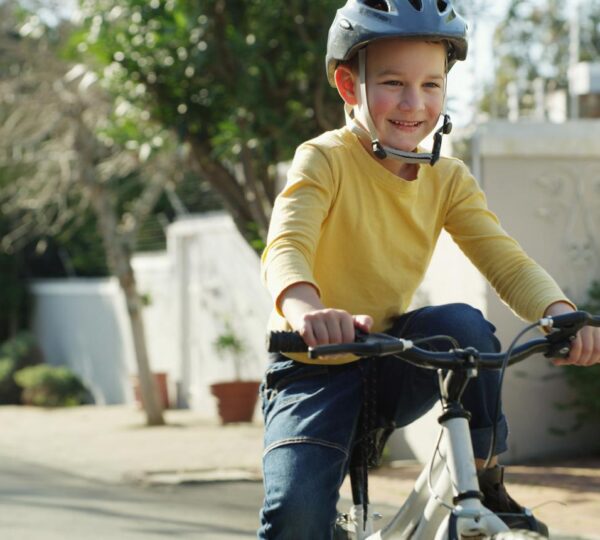
The boy complied and came to a gentle stop, slightly confused but not alarmed. He looked up at the officer, unsure of why he had been stopped during what felt like an ordinary ride.
A Careful Safety Inspection
The officer carefully examined the bicycle, focusing on key components such as the frame, wheels, chain, and brakes. These are standard points of inspection when assessing bicycle safety, especially for younger riders.
During the inspection, it became clear that several parts of the bicycle were worn beyond safe operational condition. The frame showed structural weaknesses, and the braking system appeared unreliable under pressure.
The chain also seemed loose and inconsistent, increasing the risk of slipping or sudden malfunction during use. Such issues can create serious safety hazards, particularly in shared public spaces.
The boy explained that the bicycle had been a gift from his father and that it held significant emotional value. He spoke about it with attachment, emphasizing its importance to him beyond its physical condition.
The officer listened carefully, acknowledging the emotional connection while continuing to focus on the safety concerns that had been identified during the inspection.
Explaining Safety Concerns
After completing the inspection, the officer calmly explained that the bicycle was no longer safe for regular use. The explanation was delivered in a respectful and understandable manner suited for a child.
He emphasized that the condition of the bicycle could lead to accidents, including falls or mechanical failure while riding. The goal was to ensure the boy’s safety rather than simply remove something he cared about.
The boy listened quietly, processing the information with visible confusion and disappointment. It was clear that he struggled to reconcile the emotional value of the bicycle with the safety concerns being explained.
The officer reassured him that the decision was made out of care and responsibility. Safety, especially for children, must always take priority even when emotional attachment is strong.
The Emotional Difficulty of the Moment
As the conversation continued, the boy became more visibly upset, struggling to understand why something so meaningful to him could no longer be used. His reaction reflected a natural emotional response to loss.
The officer remained patient, allowing the boy time to process the situation. Rather than rushing the interaction, he focused on ensuring understanding and emotional calm before taking further steps.
This moment highlighted the challenge of balancing emotional sensitivity with safety responsibility in situations involving children and personal belongings.
A Change in Direction
Instead of ending the interaction there, the officer guided the boy gently toward a nearby store. The purpose of this action was not immediately clear to observers watching from a distance.
The boy followed quietly, still uncertain about what was happening. The atmosphere had shifted from confusion to cautious curiosity as they entered the store together.
Inside, the officer began speaking with staff while the boy waited nearby, observing the situation with uncertainty and quiet expectation.
An Unexpected Gesture of Kindness
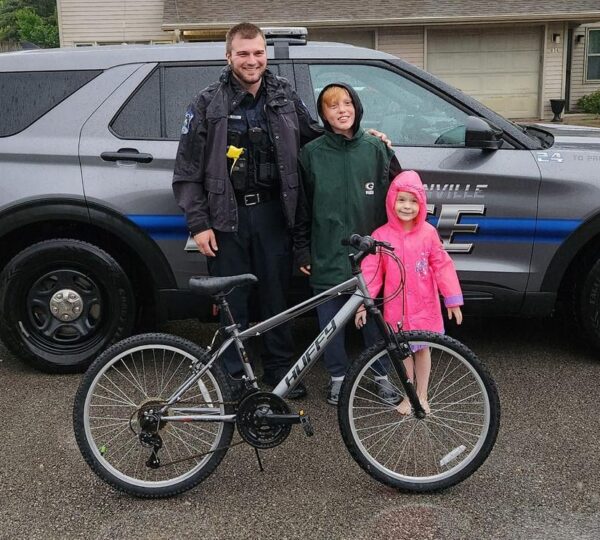
After a short period, the officer returned with a new bicycle that was clearly in safe, modern condition. It featured a sturdy frame, properly functioning brakes, and smooth mechanical components.
The bicycle had been selected to ensure reliability and safety for everyday use. It was presented not as a replacement for sentiment, but as a safer alternative for regular riding.
The officer explained that while the boy’s original bicycle held emotional value, it was important for him to have something that would not put him at risk.
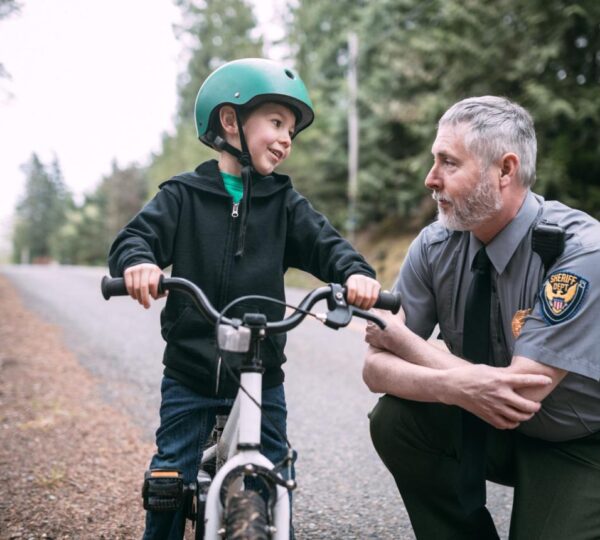
The boy looked at the new bicycle in silence, processing the unexpected development. Slowly, he approached it and placed his hands on the handlebars.
A Shift from Disappointment to Joy
What had begun as a moment of loss gradually transformed into an emotional shift. The boy’s initial sadness began to ease as he realized the intention behind the gesture.
He expressed gratitude in his own way, still holding onto memories of his original bicycle but recognizing the safety and opportunity provided by the new one.
Observers who had witnessed the earlier interaction now saw a completely different outcome. The situation had changed from concern and uncertainty to relief and appreciation.
The officer’s actions demonstrated that authority can involve not only enforcement but also compassion and constructive support when appropriate.
A Safe Ride Forward
With his new bicycle, the boy eventually returned to the street and began riding again. This time, the movement was smoother, quieter, and more stable.
The experience felt different for him, as he adjusted to a safer and more reliable bicycle while still carrying the memory of his previous one.
The neighborhood returned to its calm state, but the interaction left a lasting impression on those who had observed it.
The situation served as a reminder that safety decisions, even when emotionally difficult, are often made with protective intent and long-term well-being in mind.
It also demonstrated how acts of kindness can transform moments of disappointment into opportunities for care, understanding, and positive change.