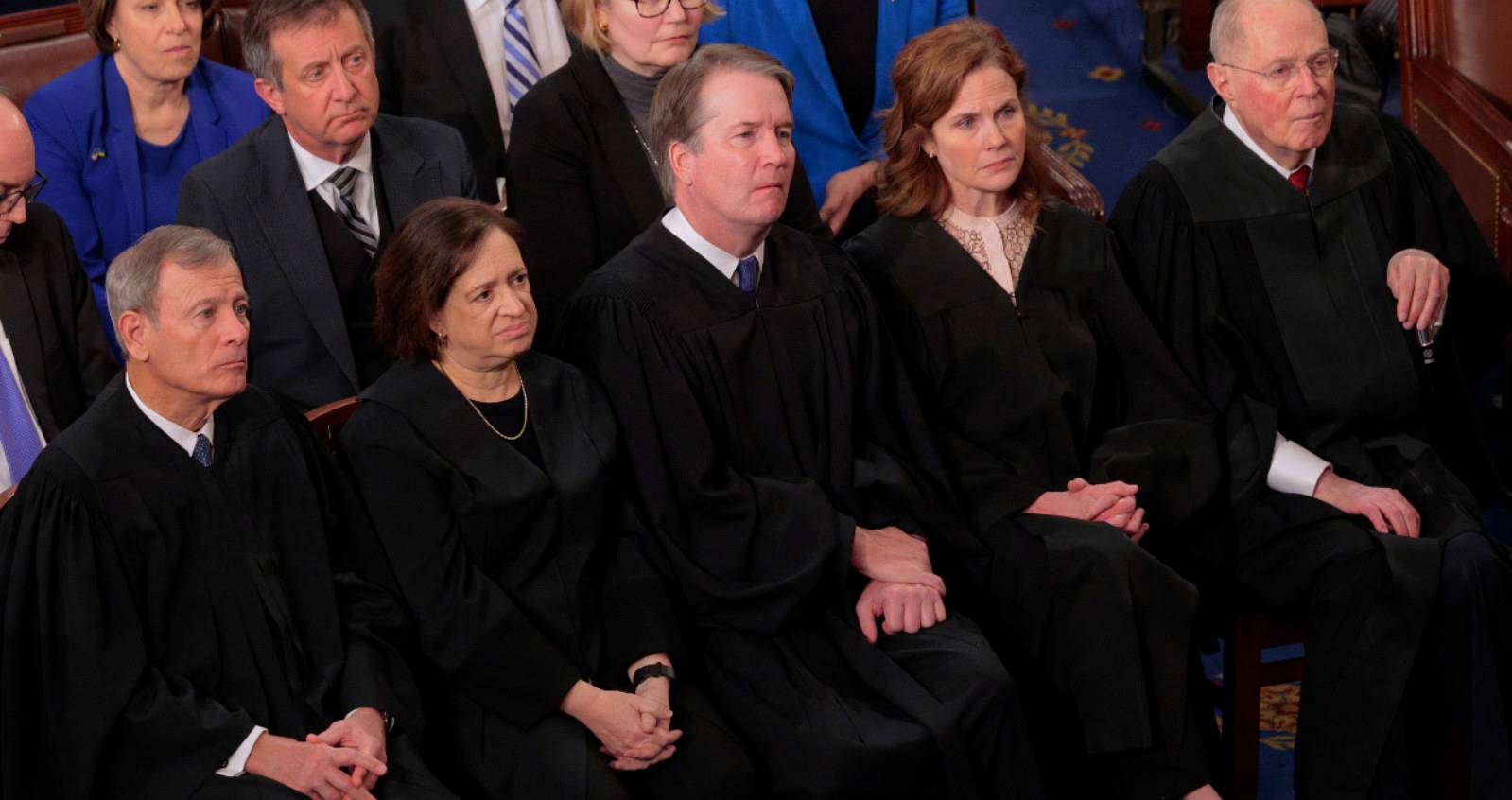
According to police, the call came through the department’s non-emergency line.
“No additional police resources were utilized,” the department said. Advertisement The incident was first reported by freelance journalist Andrew Leyden, who shared police dispatch audio indicating that authorities were responding to a report involving the sound of gunshots.
In the audio, a dispatcher informed responding officers that attempts to contact the caller had been unsuccessful.
Officers immediately coordinated with Supreme Court Police assigned to the residence and quickly determined that the report was fictitious
Advertisement
This is outrageous and should be treated like the attempted assault/murder that it is.
— Carrie Severino (@JCNSeverino) May 28, 2026
If Justice Barrett didn’t have constant security at her home, this could have been fatal. This is why the Court has requested a budget increase to cover security costs. Congress can not keep… https://t.co/8mT7TJpg0Y
🚨 Yet ANOTHER assassination attempt was made against a sitting conservative U.S. Supreme Court Justice via SWATTING
— Nick Sortor (@nicksortor) May 28, 2026
Someone called 911 saying there were GUNSHOTS at Amy Coney Barrett’s home, wanting SWAT to kick down her door
This is LEFTIST TERRORISM. pic.twitter.com/LmKXDqADy6
Swatting involves falsely reporting a serious emergency, often involving violence, in order to trigger a significant police response at a targeted person’s home.
The dangerous tactic has been used against public officials, celebrities, journalists and members of Congress in recent years.
“Unknown if it’s going to be a swatting situation,” the dispatcher said
Police have not announced any arrests in connection with the incident.
The Supreme Court did not immediately respond to requests for comment.
Justice Barrett and several of her conservative colleagues became major targets of protests following the leak of the draft opinion in Dobbs v. Jackson Women’s Health Organization and the court’s subsequent decision overturning Roe v. Wade in 2022.
Law enforcement officials have warned that swatting incidents can create potentially deadly situations by causing officers to respond under the belief that lives may be in immediate danger
Protesters gathered outside Barrett’s home during that period, drawing criticism from those who argued demonstrations at justices’ private residences crossed an important line.
Security concerns escalated further in June 2022 when a California man traveled to Maryland with the intention of assassinating Justice Brett Kavanaugh.
Nicholas John Roske was arrested outside Kavanaugh’s home after calling 911 on himself.
The swatting attempt comes after years of heightened security concerns surrounding members of the Supreme Court
He was later convicted and sentenced to prison.
The latest incident involving Barrett comes as Chief Justice John Roberts recently addressed growing public hostility toward the court and concerns about how Americans view the institution.
“I think they view us as truly political actors, which I don’t think is an accurate understanding of what we do,” he added.
At the time, activist groups circulated maps that allegedly identified the home addresses of several Supreme Court justices, including Barrett, Brett Kavanaugh, Clarence Thomas, Samuel Alito, Neil Gorsuch and Chief Justice John Roberts
Roberts argued that many Americans misunderstand the role of the judiciary and warned against turning legal disagreements into personal attacks against judges and justices.
He also stressed that criticism should focus on the legal merits of decisions rather than individual members of the court, The National Review reported.
“As soon as that happens, that’s not appropriate, and it can lead to very serious problems,” Roberts said.
According to authorities, Roske told dispatchers he had come “from California to kill a specific” Supreme Court justice
While no one was injured and the report was quickly determined to be false, the incident serves as another reminder of the security challenges facing public officials in an era of growing political tensions and online threats.