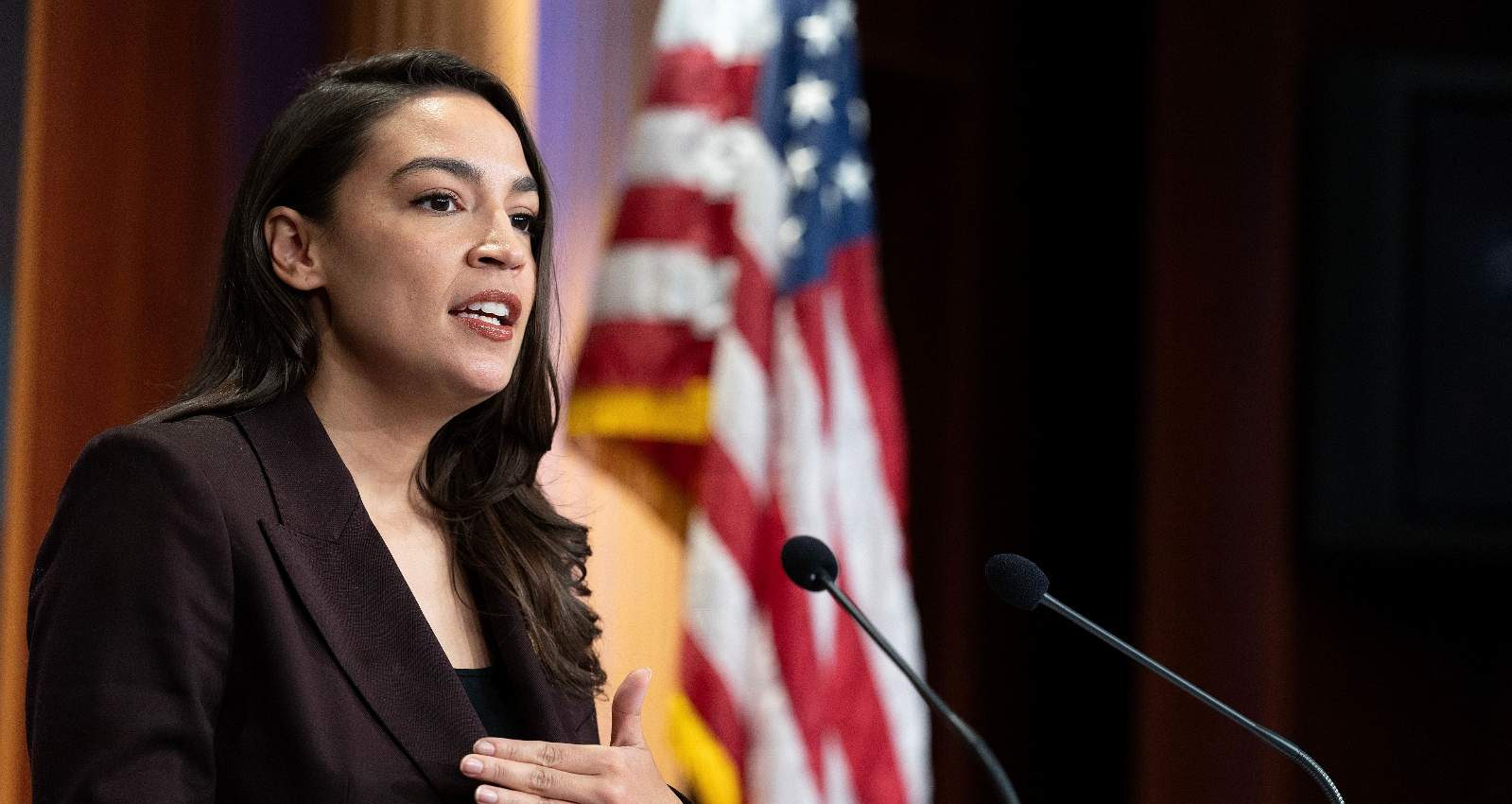
Rep. Alexandria Ocasio-Cortez dismissed speculation Friday night about a possible 2028 presidential campaign, saying her goals extend far beyond holding political office.
Speaking during a conversation hosted by the University of Chicago Institute of Politics alongside Democratic strategist David Axelrod, Ocasio-Cortez responded to questions about whether she could seek the presidency or challenge Senate Minority Leader Chuck Schumer in the future.
“My ambition is way bigger than that,” Ocasio-Cortez said.
She argued that political and media elites often assume ambition is tied to titles or positions of power, but said her focus is on broader policy goals and long-term change.
“They assume that my ambition is positional,” she said. “They assume that my ambition is a title or a seat. And my ambition is way bigger than that. My ambition is to change this country.”
Ocasio-Cortez pointed specifically to issues such as single-payer healthcare, workers’ rights and women’s rights as priorities she views as more important than any one elected office.
“Presidents come and go,” she said. “Senate, House seats, elected officials, come and go, but single-payer healthcare is forever. A living wage is forever. Workers’ rights are forever.”
During the discussion, Ocasio-Cortez also criticized what she described as pressure from powerful media and business interests following commentary about her political future.
She referenced an opinion piece connected to Jeff Bezos and The Washington Post, arguing that speculation about a future presidential run carried what she described as an implied warning from elites.
“This was the elite saying, ‘If you want this job, you just stepped out of line,’” she said.
Ocasio-Cortez framed the situation as part of a broader struggle between grassroots political movements and wealthy institutions she believes exert influence over media and public narratives.
She added that not being focused on pursuing a specific office gives her greater freedom politically. “It is tremendously liberating,” she said. “I get to wake up every day and say, ‘How am I gonna meet the moment?’”
The comments are likely to fuel further speculation about Ocasio-Cortez’s long-term political future, even as she attempted to downplay questions about seeking higher office.
At 38, Ocasio-Cortez remains one of the Democratic Party’s most visible progressive figures and continues to attract national attention well beyond her congressional district.
While she stopped short of ruling out future campaigns, her remarks emphasized ideology and movement-building over traditional political advancement.
AOC: "My ambition is way bigger than being President. My ambition is to change this country." pic.twitter.com/xOa69DzFf4
— Nashville Tea Party (@NashvilleTea) May 9, 2026
In April it was reported that Ocasio-Cortez was taking steps that could position her for a potential 2028 presidential run, while also working to strengthen support among progressive voters who have raised concerns about her political direction, according to a report.
The New York Democrat is also said to be weighing a possible Senate bid. In recent months, she has adopted a more critical stance on U.S. policy toward Israel, including opposing certain forms of funding, a shift that allies and observers say is aimed at rebuilding ties with the party’s left wing, Axios reported.
Ocasio-Cortez has faced increasing criticism from some progressive activists who previously viewed her as closely aligned with Bernie Sanders but now argue she has moved closer to establishment Democrats while seeking broader national appeal.
Privately, according to sources cited by Axios, Ocasio-Cortez has expressed frustration with such criticism, viewing it as counterproductive to the broader goals of the progressive movement. One strategist said she has “lamented that the left was not there for her” and suggested that some critics are “never pleased.”
Her recent outreach has included renewed engagement with the Democratic Socialists of America, a group that played a significant role in Ocasio-Cortez’s early political rise but later distanced itself amid disagreements over Israel policy.