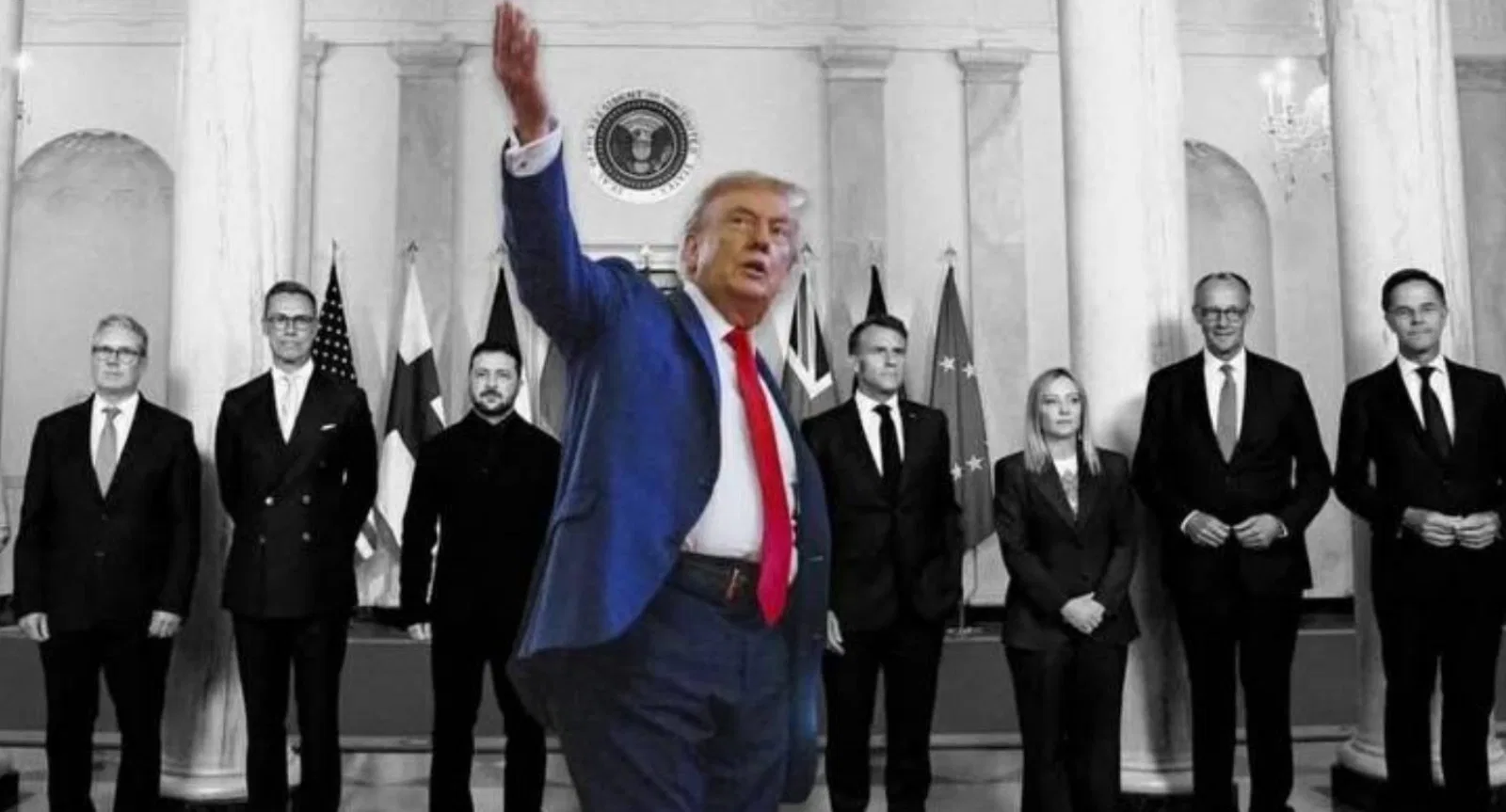
The United Kingdom, France, Germany, Japan, Italy, and the Netherlands said they are prepared to assist in efforts
to reopen the Strait of Hormuz following pressure from President Donald Trump. The response from U.S. allies in
Europe to the conflict with Iran has been mixed.
Advertisement
Some governments have criticized the military action as falling outside international legal frameworks, while others have questioned the
overall objectives of the campaign.
Despite those concerns, the six countries issued a joint statement expressing willingness to help secure the vital maritime
corridor, which is a key route for energy supplies to Europe. “We condemn in the strongest terms recent
attacks by Iran on unarmed commercial vessels in the Gulf, attacks on civilian infrastructure including oil and gas
installations, and the de facto closure of the Strait of Hormuz by Iranian forces,” the statement begins.
The statement then pressed Iran to halt all attacks on those civilian and economic targets, noting the importance
of freedom of navigation and the harm being done to global energy markets.
“Consistent with UNSC Resolution 2817, we emphasise that such interference with international shipping and the disruption of global
energy supply chains constitute a threat to international peace and security,” the statement reads. “In this regard, we
call for an immediate comprehensive moratorium on attacks on civilian infrastructure, including oil and gas installations.
“We express our readiness to contribute to appropriate efforts to ensure safe passage through the Strait. We welcome
the commitment of nations who are engaging in preparatory planning,” the statement added, per the Washington Examiner.
Advertisement
The latter portion of the statement marks the first clear indication from several key U.S. allies that they
may be willing to contribute to a multinational effort to reopen the Strait of Hormuz, signaling a potential
shift in their posture after earlier hesitation.
However, the statement provided few specifics, and it remains unclear what level of military or logistical support each
country would ultimately commit.
The United States maintains a larger fleet of major naval vessels than the other countries combined, but its
forces are deployed globally. Analysts say a coordinated contribution from the six nations could significantly bolster the naval
presence in the region and help lend broader international backing to efforts aimed at securing the critical shipping
lane, the outlet reported.
Not all NATO allies are on board, however. Italian Prime Minister Giorgia Meloni criticized the war with Iran
as “outside” international law, telling Italy’s Parliament it was “an intervention that Italy is not part of and
does not intend to take part in.”
French President Emmanuel Macron also criticized the conflict, saying the military action was “outside of international law” and
that France “cannot approve” of the U.S. strikes.
Europe has been especially impacted by disruptions in the Strait of Hormuz, as many countries have grown increasingly
reliant on liquefied natural gas from Qatar. That dependence expanded after Russia’s invasion of Ukraine, as European nations
sought to reduce their reliance on Russian energy supplies.
On Thursday, Trump expressed his dissatisfaction with Iran’s selection of Mojtaba Khamenei as the new supreme leader, who
was appointed after his father, Ayatollah Ali Khamenei, was killed in an airstrike at the start of Operation
Epic Fury.
Trump stated that he does not believe Mojtaba Khamenei “can live in peace” and commented that the timeline
of the U.S. operation has exceeded expectations regarding results at this early stage. U.S. and Israeli operations in
Iran are “way beyond expectation in terms of results this early.”
Trump warned in a Truth Social post on Monday that Iran will be struck “twenty times harder” if
the regime does anything to obstruct the flow of oil within the Strait of Hormuz.